


This one is our take on England's most famous dish. Hand-cut Chipperbec potatoes, halibut straight off the boat, and a beer batter that fries up light and stays crisp.
The buttermilk soak is what makes it work. It seasons the fish, firms it up, and gives the flour dredge something to hold onto so the batter never slides off in the fryer.
Stir the mayonnaise, chopped pickle, capers, parsley, lemon juice and Dijon together in a small bowl. Season with salt and pepper. Cover it and put it in the fridge while you cook. It gets better as it sits, so make it first.
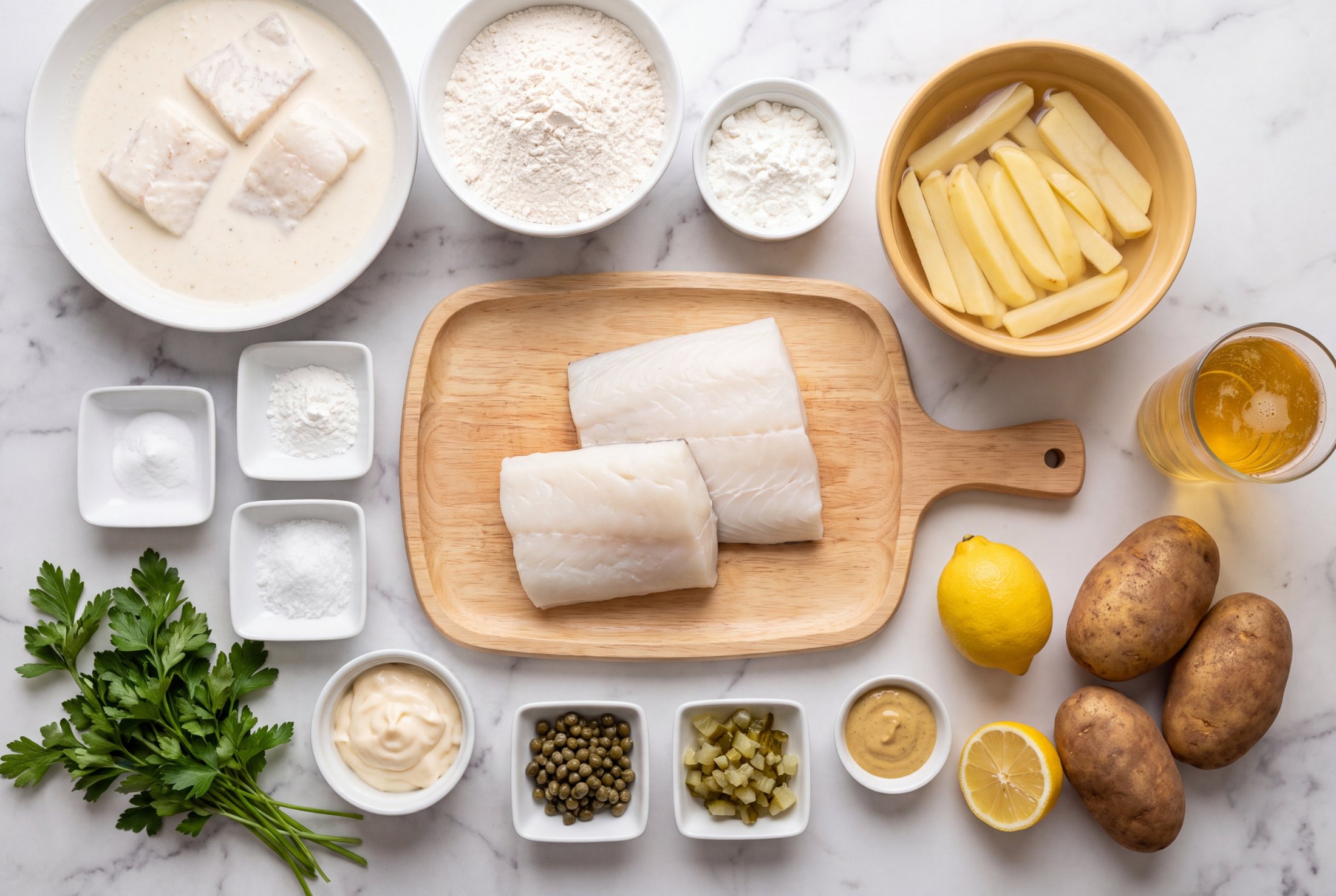
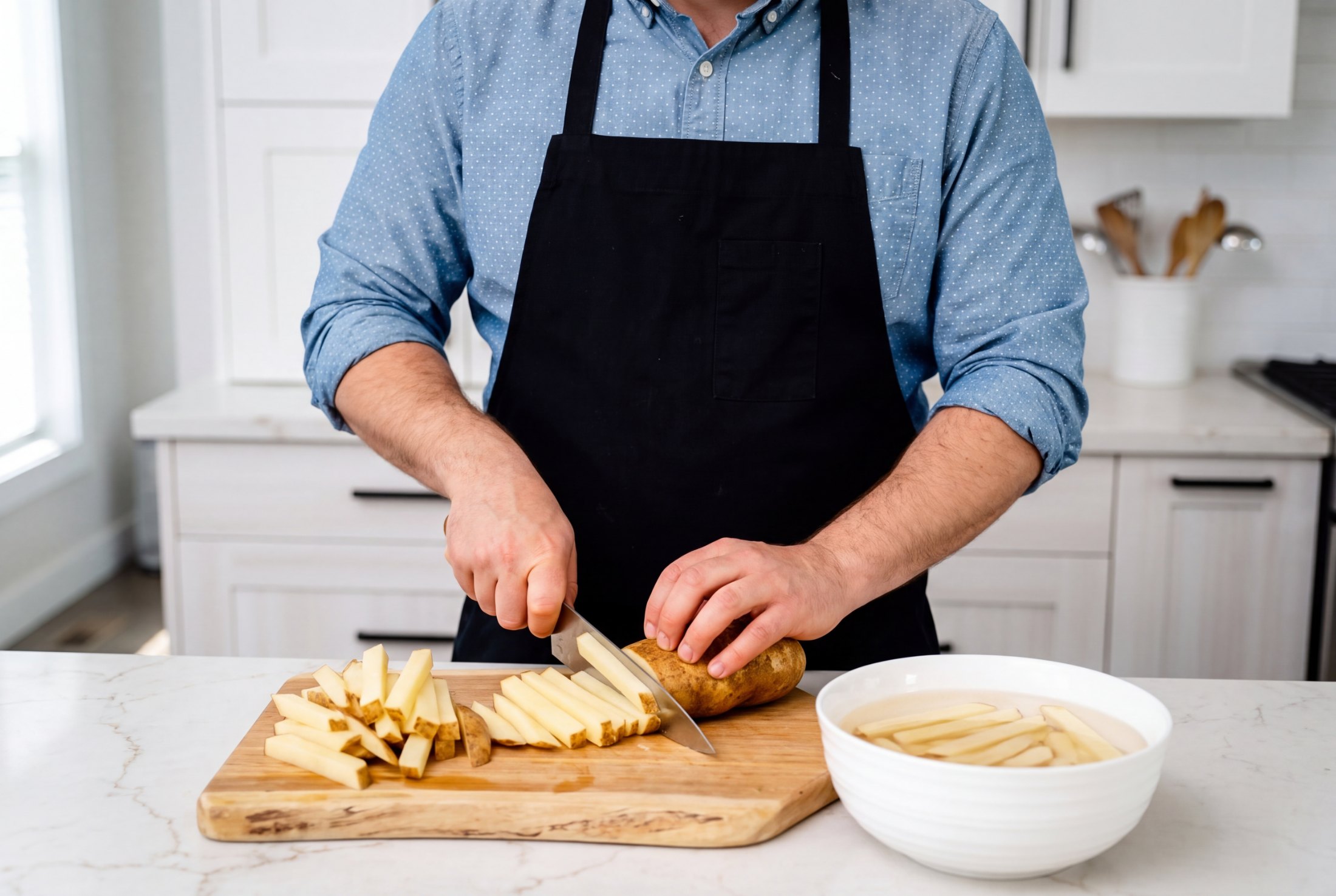
Cut the Chipperbec potatoes by hand into thick batons, about half an inch square. Chipperbecs are a frying potato and they hold up to a cut this size without going hollow in the middle. Drop them into a bowl of cold water as you go. That rinses off surface starch and keeps them from browning while you work on the fish.
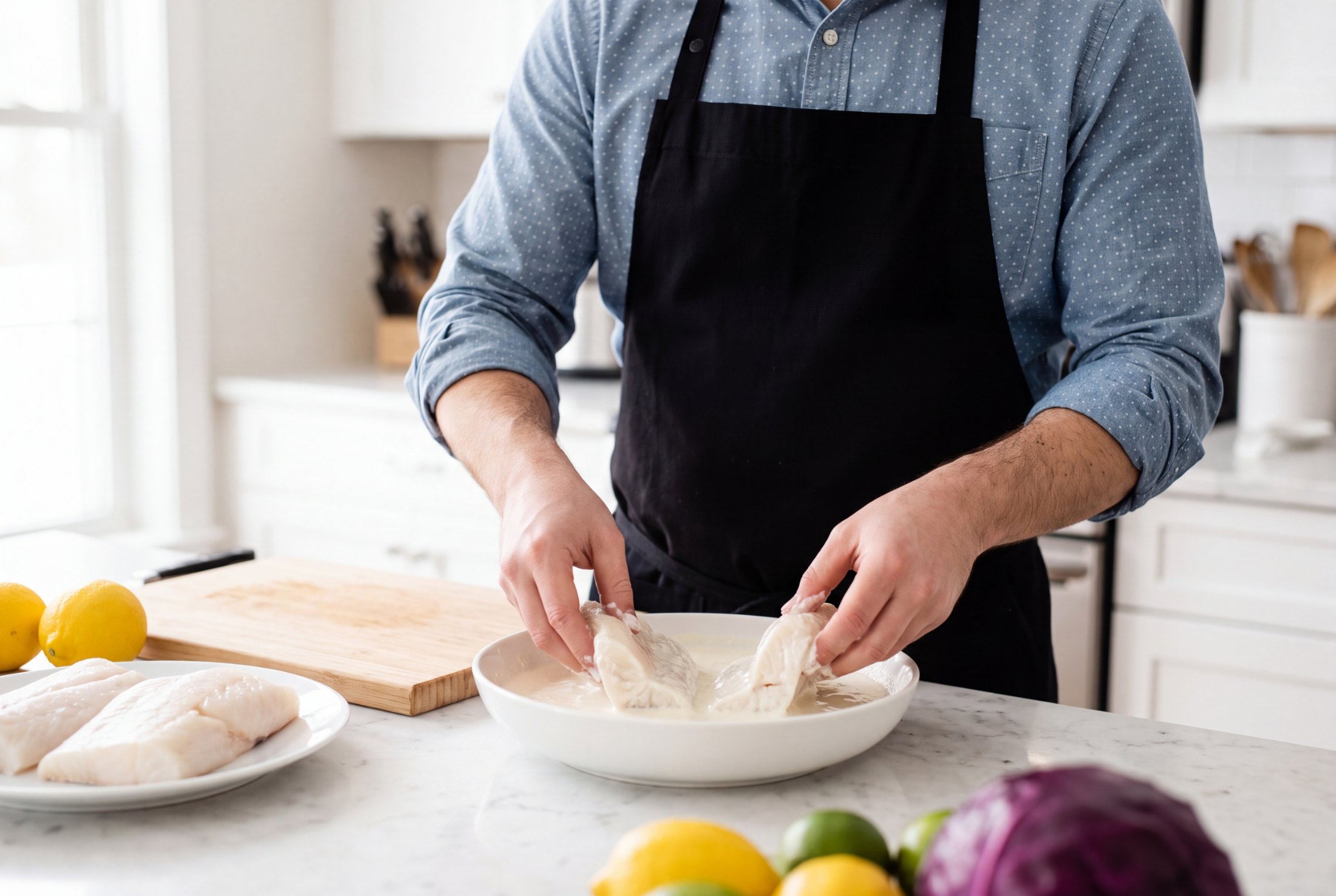
Put the halibut portions in a shallow dish and pour the Bulgarian style buttermilk over them until they are covered. It is thicker and tangier than regular buttermilk, which is exactly what you want here. Let them sit at least 30 minutes. An hour is better if you have the time.
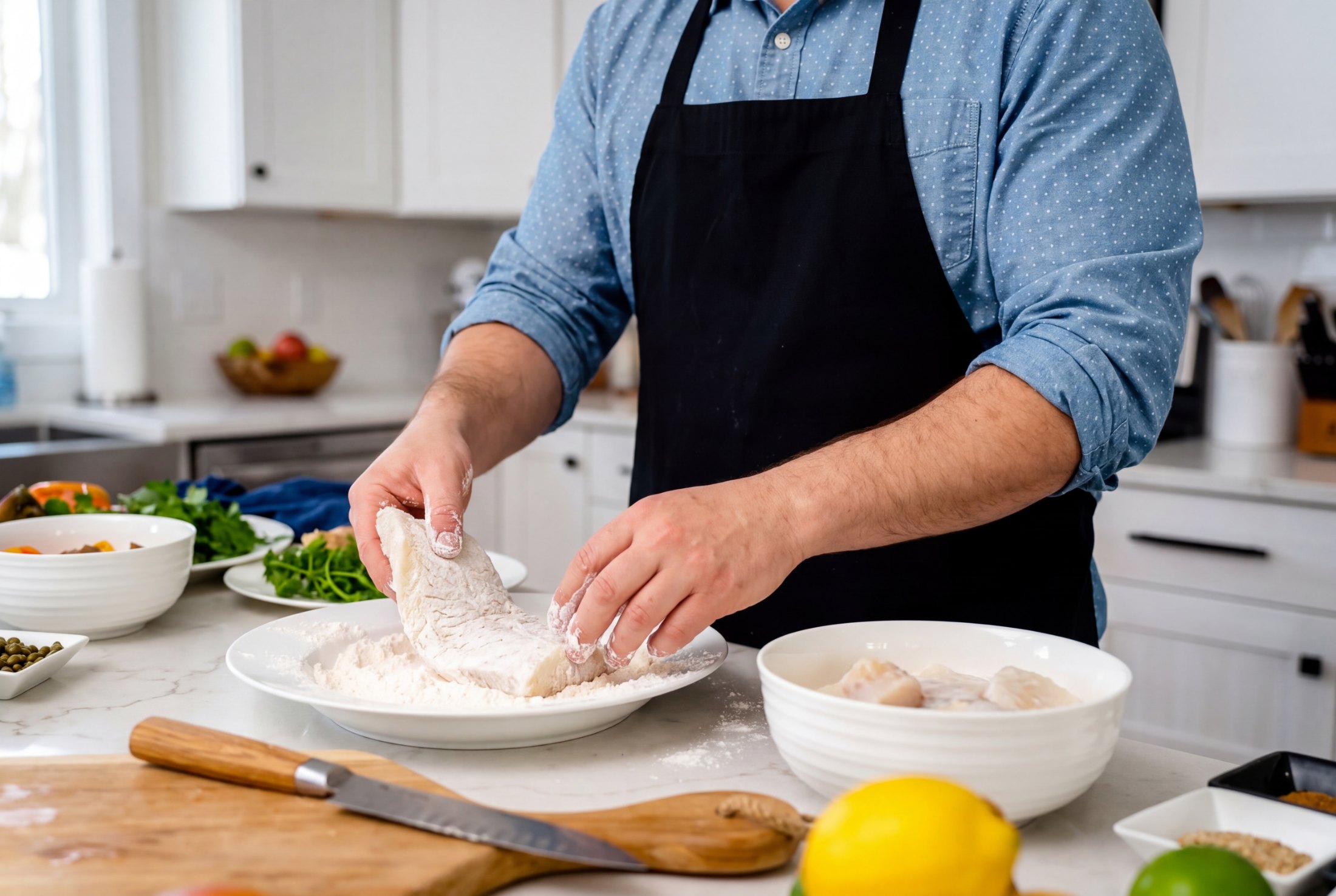
Lift a piece of halibut out of the buttermilk, let the extra run off, and lay it in the flour. Turn it so all sides are coated, then shake off what does not stick. The dredge should look like a thin even layer, not a thick paste. Set the dredged pieces on a rack while you do the rest.
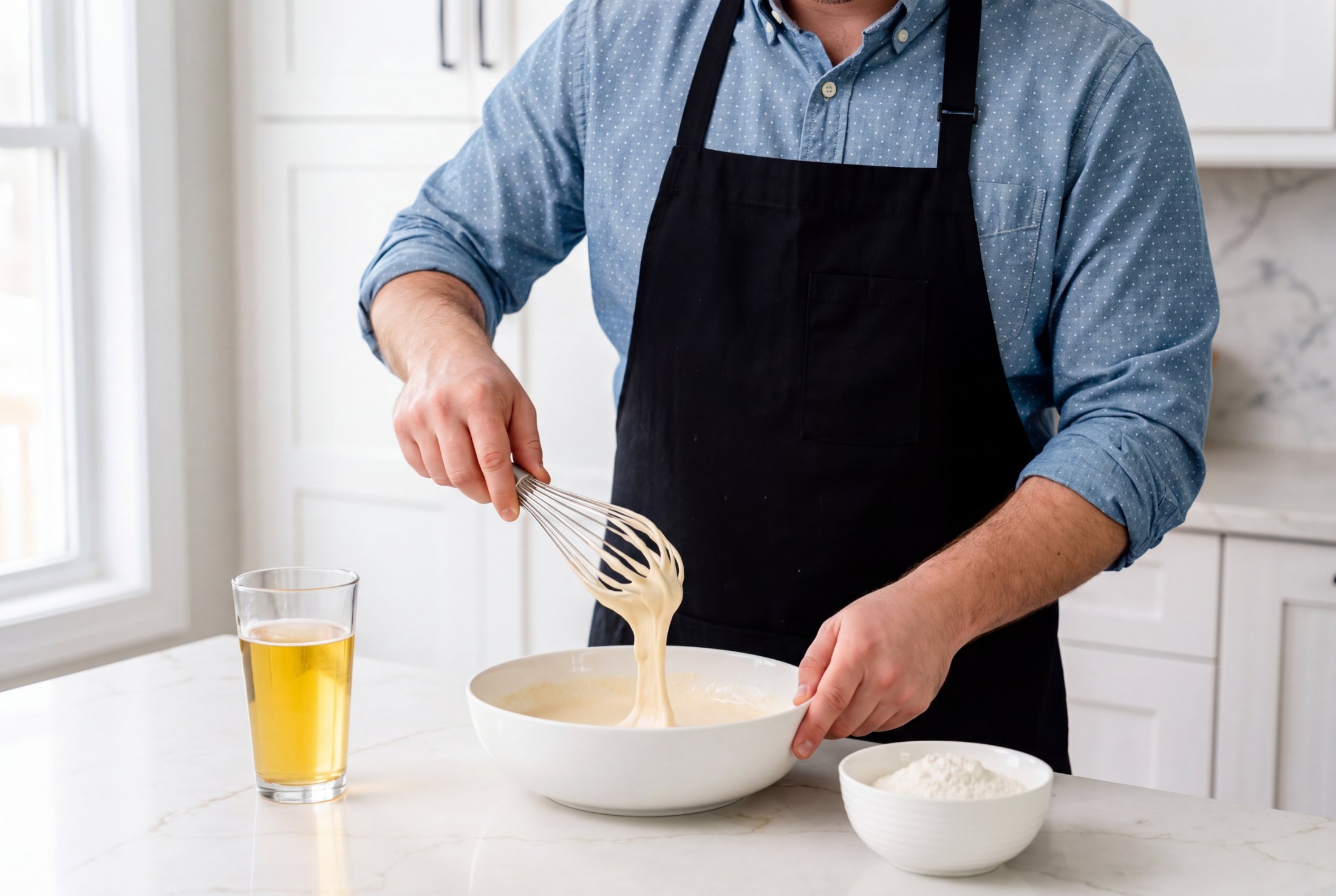
Whisk the flour, cornstarch, baking soda, baking powder and salt together first so the leavening is spread through evenly. Pour in the room temperature beer and whisk until smooth, then add a splash of water if it is too thick to coat the back of a spoon. Room temperature matters. Cold beer foams up and you lose the lift.
Heat the beef tallow or shortening to 350°F. Drain the chips and dry them well, because wet potatoes will spit. Fry them in batches for 5 to 7 minutes until they are cooked through and just barely colored. Pull them onto a rack. They go back in later to crisp.
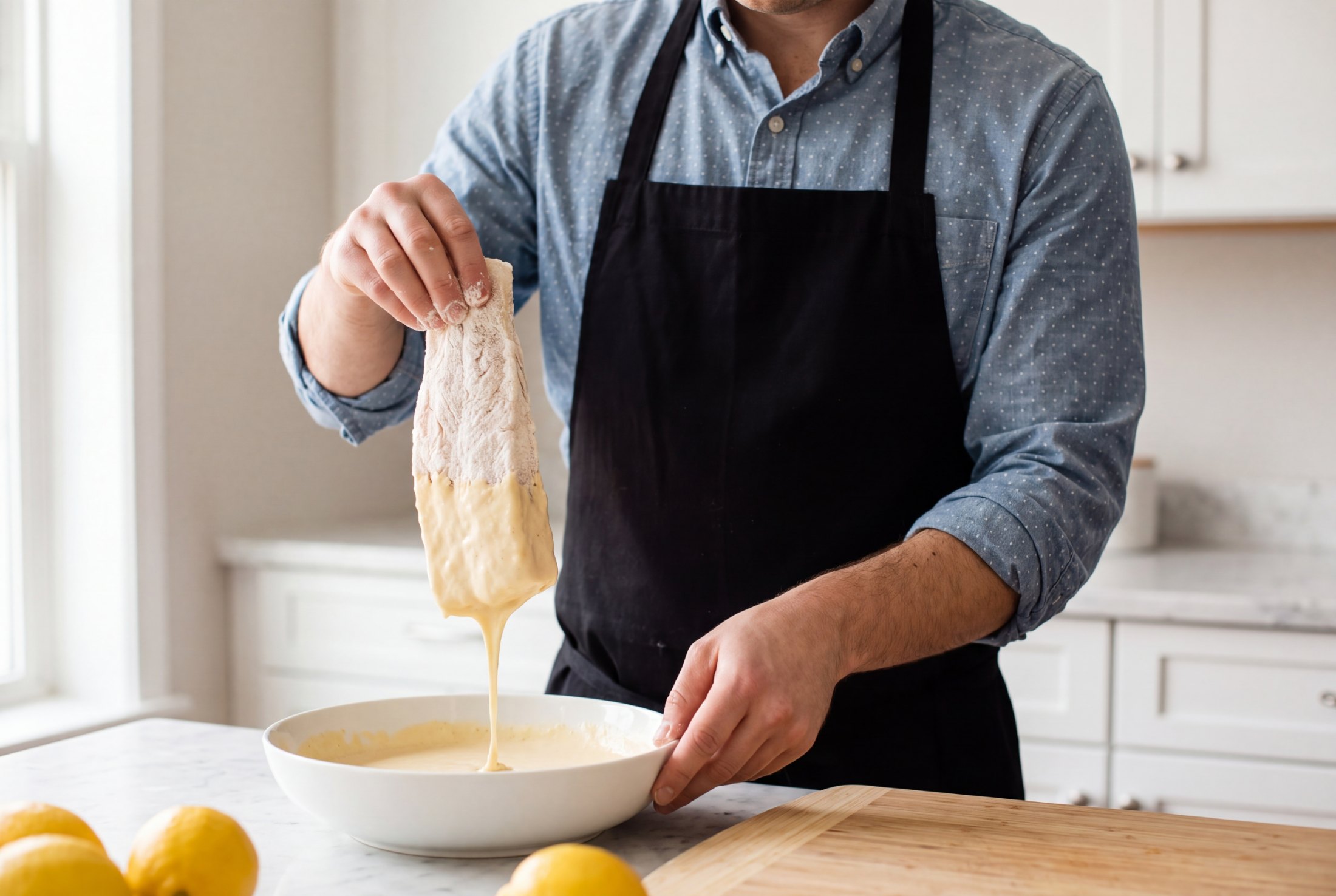
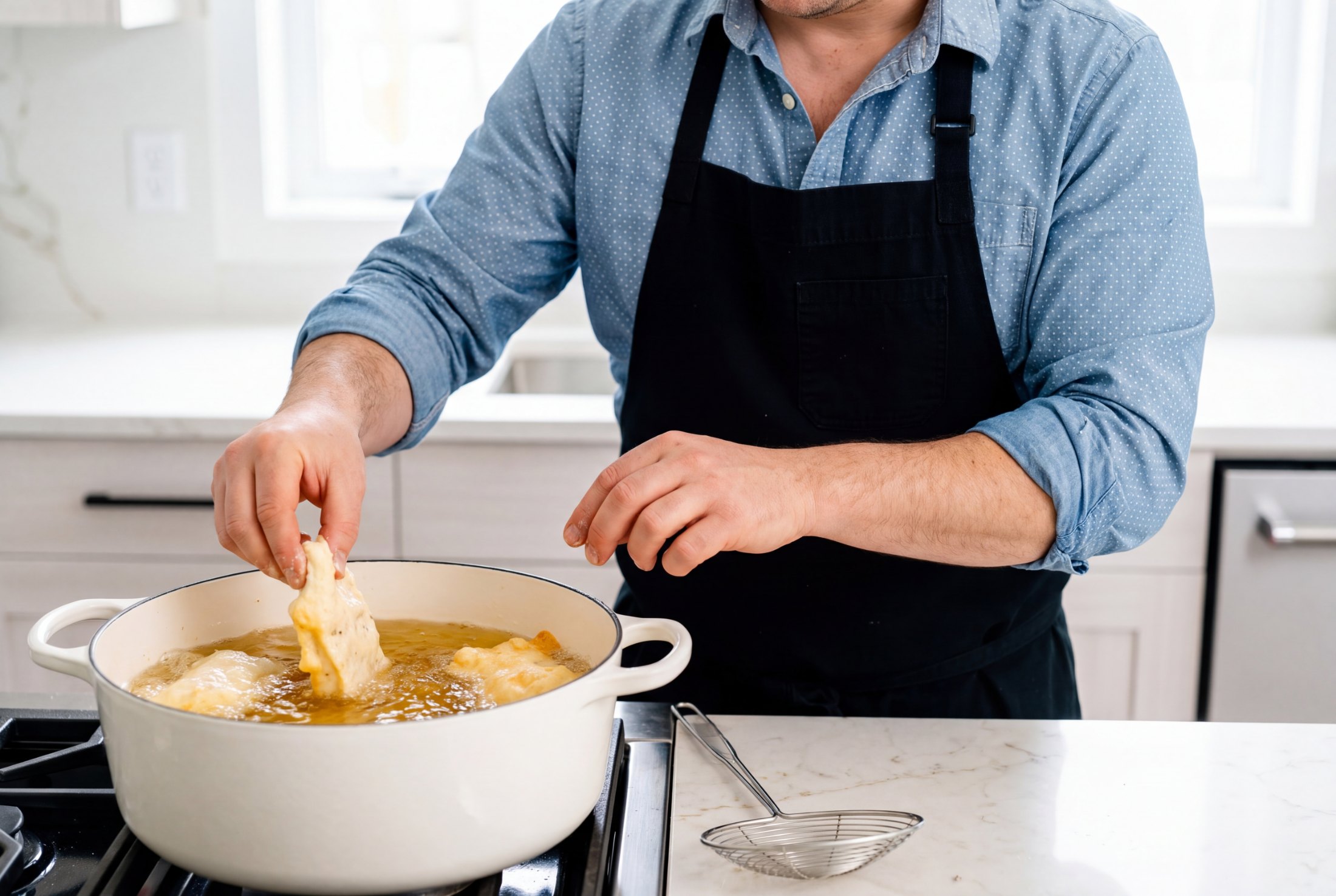
Hold a dredged piece by one end, dip it into the batter and let the extra run back into the bowl. Lower it into the fat away from you so it does not splash, and let go once it starts to float. Fry 4 to 6 minutes until deep golden. Do a few pieces at a time. Crowding the pot drops the temperature and the batter soaks up fat instead of crisping.
Put the chips back in the fat for 2 to 3 minutes until they are golden and crisp. Move the fish and the chips to a wire rack, not paper towels, so the bottoms do not steam. Salt them right away while the surface is still hot enough to hold it.
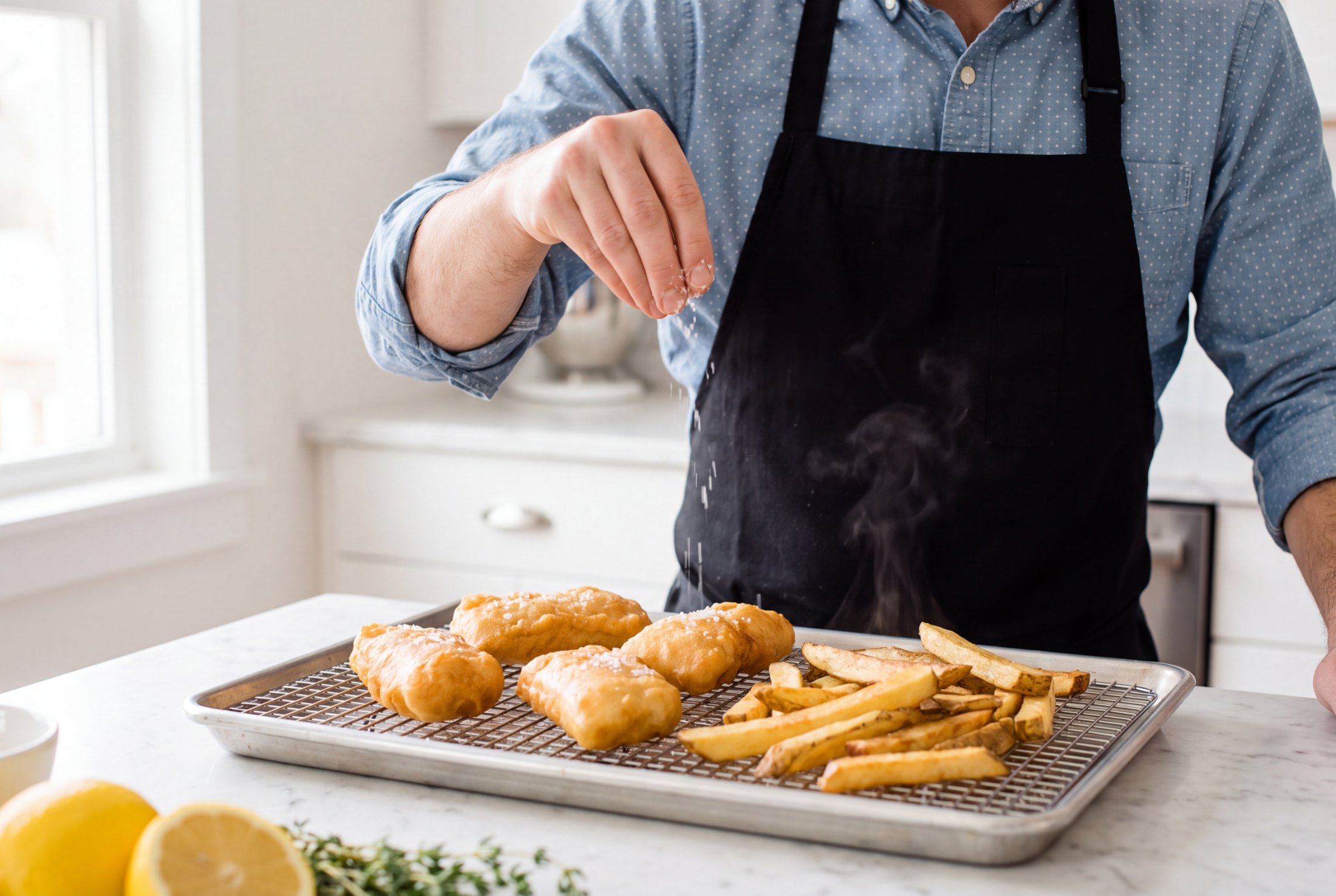
Pile the fish and chips onto plates and add the tartar sauce and a fresh lemon wedge. Squeeze the lemon over the fish right before you eat it. Serve straight away, while the batter still cracks when you cut into it.
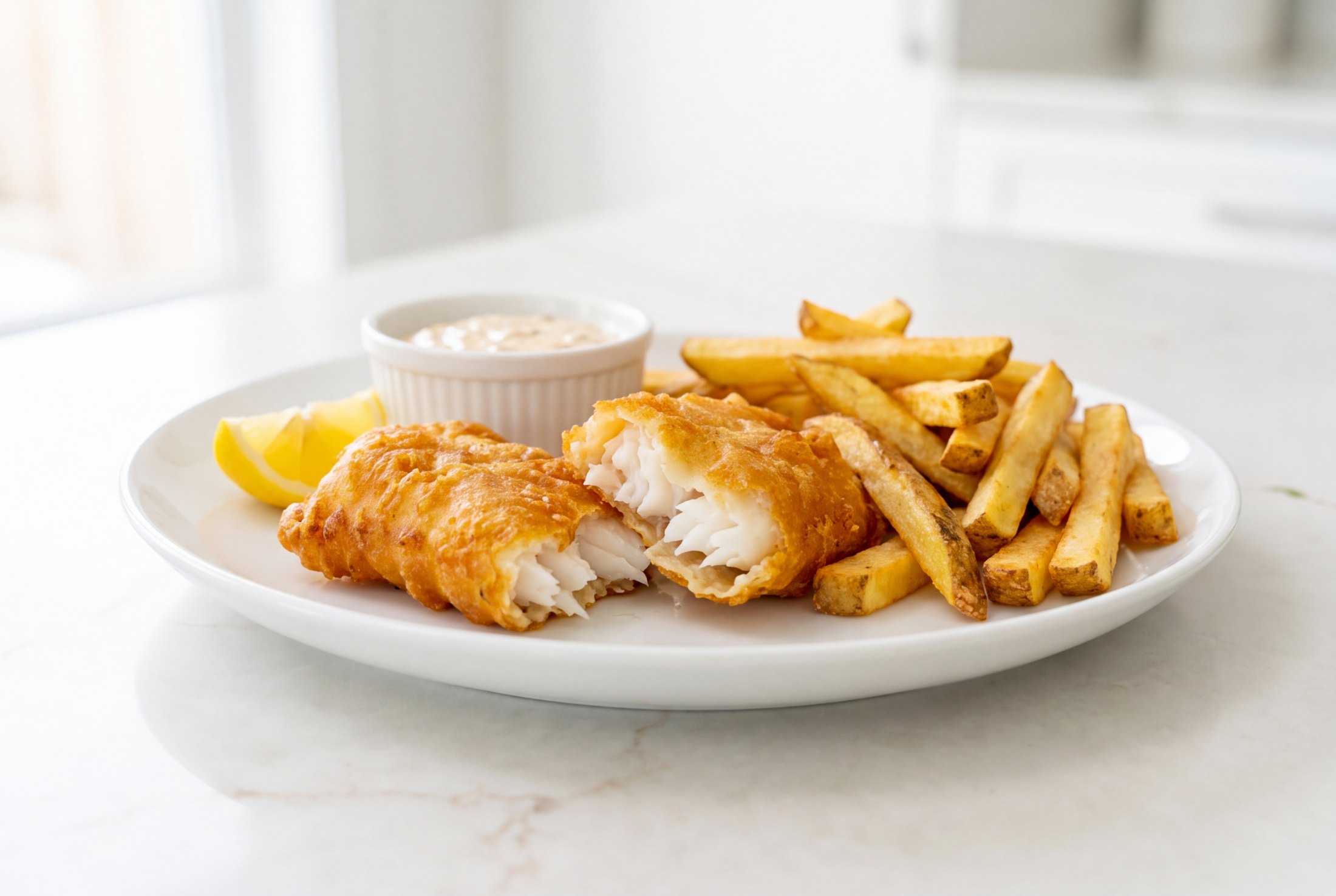
Fish and chips is simple food and it lives or dies on temperature. Keep the fat at 350°F, work in small batches, and get it to the table fast. Halibut is what we reach for, but cod, lingcod and rockfish all fry up well. Malt vinegar on the chips is worth trying if you have never done it, and a cold lager or a pot of tea finishes the job.