Why Pybus Point Lodge Offers the Best Fishing in Alaska
LEARN MORE


Millions of people have “fishing in Alaska” on their bucket list, and for good reason. The state has some of the most pristine ocean and freshwater fishing in the world. But what is it about Alaskan fishing that makes it so great? Let’s explore some of the reasons that the 49th state to be added to the United States is such an amazing destination for anglers.
Perhaps the most common reason that people think about Alaska as a premier fishing destination is simply the proliferation of species that migrate along the coast between the months of May and September.
The most famous summer migration is that of the salmon. These fish are anadromous, which means they can live in both the saltwater ocean and the freshwater rivers and streams. There are four main species of salmon that make their way up through the waters of the Pacific off the coast of Alaska:
At genetically-predetermined points in their lives these salmon (between 2 and 8 years after they are born), return to their ‘natal’ stream where they were first born. Every year millions of salmon make the journey that takes them straight through the waters off the Alaska coast.
For some, that journey could be as long as 3,000 miles or more. It’s a harrowing trek from their saltwater habitat back to their river where they were first born fighting against the elements and dodging predators. Only about one in 1,000 make it back to the river and successfully lay eggs. For the ones that do make it, they lay eggs and then eventually die, fertilizing the water and helping the next generation of salmon to grow and mature.
Lucky fishermen or women can find an abundance of salmon trying to make their way to their spawning grounds and catch a few of them along the way. Different species make their way north at different times, so if you have a preference you can plan your summer fishing trip to Alaska based on which species you hope to find:
If you’re hoping to get the biggest variety, the last two weeks of July are going to be your best bet to find every salmon species at some point in their migration.
When the water warms up down south, millions of fish—and other species that might want to feast on them, like whales and orca—head north where the colder waters are better for reproduction. At every stage of development, salmon need water that is:
Natural environments are always in flux, but salmon have learned that the rivers and streams in Alaska provide some of the best spawning ground to lay eggs for development.
Some species of fish live continually in and around Alaska, such as halibut. These fish don’t migrate much at all except maybe a few hundred miles down toward the Oregon coast or up toward the Arctic Ocean. But their primary habitat is in the colder waters of Alaska, where they can find abundant food all year long. It’s perfect for fishing because you can always find halibut in season in and around Alaska.
Rockfish are another species that live most of their lives in the same areas off the Alaskan coast, which means you can find them in season whenever you visit Alaska for fishing.
Unlike many fishing excursions, when you head to Alaska in the summer you don’t just get to fish during normal daytime hours. With its location on the far northern side of the globe you get multiple hours of bonus daylight (what the locals call “twilight hours”) to get out longer. When you book a trip to Pybus Point Lodge you can head out for eight hours of fishing each day with one of our guides, and still have plenty of daylight left for things like whale watching, glacier trips, and kayaking in the serene Pybus Bay.
Alaskan fishing destinations are also one of the best choices for anyone who wants to do more than just one type of fishing. At the all-inclusive Pybus Point Lodge you can head out for a day on the ocean to catch saltwater fish one day, then find out where some of the best stream and freshwater fishing is the next day. Our expert guides can tell you the best places and even take you there so you know you’re coming home with an amazing catch no matter where your adventure takes you.
Start planning your next fishing trip at Pybus Point Lodge today. Learn more about our all-inclusive resort with five-star accommodations, gourmet food, and the best fishing guides in the business. Book today.
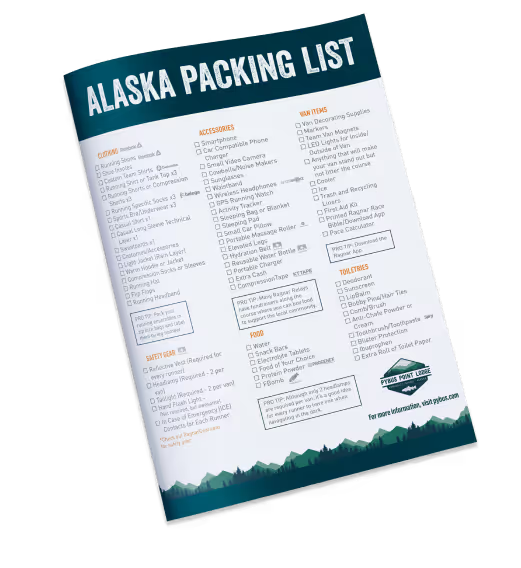
Download, share, or print out our PDF Packaging list to make sure you bring all the gear you need for your Alaska vacation!
DOWNLOAD NOWDiscover why waterfalls around Pybus Point Lodge are unforgettable, offering stunning views and unique adventures. Plan your trip today!
LEARN MOREDiscover why people like you can’t stop talking about Pybus Point Lodge. More than 30 years ago, the lodge opened as a simple fishing camp, drawing a devoted following in spite of basic accommodations. With new owners and experienced guides and crew, our corner of Alaska has become an unbeatable fishing and eco-tourism resort.


Enjoy unlimited access to our fleet of motorized skiff boats. We’re just minutes away from beautiful freshwater stream fishing, and some of our guests’ biggest halibut catches have been reeled in on a skiff.


Three new 33’ walk-around boats make their debut for our 2019 season. Featured in the Seattle Boat Show and designed stem to stern specifically for ocean conditions in Alaska's Inside Passage, we couldn’t ask for better boats.


Guests love our build-your-own lunches, featuring fresh ingredients and thin-sliced meat we smoke right outside. Meals at the lodge are always made to order – no buffets or cafeteria-style meals at Pybus Point Lodge! Our chef has created menu options that are beautiful and delicious without feeling pretentious or unfamiliar.


If you’re going to come all the way to Alaska, you may as well fish with an experienced guide on hand to keep you on the fish and take care of all the little details. You can enjoy the scenery, your company, and the world-class fishing. You’ll get your guide’s attention as much as eight hours each day – already included in the cost of your trip.


Upgrade your trip to see the Alaskan wilderness from the air. Our experienced pilot will land on a secluded lake and guide you to some of the best salmon and native trout fishing in the state.


While you go out and play, our talented staff will make sure your room stays tidy and clean! We receive even more compliments about our friendly staff than we do about Alaska's stunning beauty!


Pybus Point Lodge is located on the remote and secluded far south edge of Admiralty Island National Monument. Coverage is always tricky in deep valleys and remote natural areas. We found that AT&T has the most reliable cellular service at the lodge while T-mobile, Sprint, and Verizon can be picked up while out on the ocean. We do have a lodge phone you can use if necessary.
If you can't get a signal, we do provide free high-speed WIFI to the lodge and cabins. A popular option is to utilize your phones WIFI calling mode to communicate and take calls while at the cabin, although we prefer to unplug and enjoy all that the island has to offer.


The calm, cool waters of Alaska’s Inside Passage are the perfect habitat for humpback whales. Our guests tell us close encounters with these peaceful giants have changed the way they see the world – and we know just what they mean.


You’ll stay with us on Admiralty Island, called Xootsnoowú by native Tlingit people, which means “Fortress of the Bears.” There are more bears on our island than in all 49 other states combined – and more than 2.5x the number of people here!


A short ride in one of our skiffs will take you to the mouth of a river where, if your timing is right, you can watch salmon make their final run to spawn. When it isn’t overrun by bears dining on the feast, you can walk upstream just a few minutes to a beautiful waterfall in the thick forest.


From tiny phosphorescent algae lighting up our private docks to enormous humpback whales hunting in our deep, calm waters, you won’t find a more beautiful place to experience Alaska. Pybus Bay is a photographer’s paradise – bald eagles and brown bears, orca, otters and sea lions, and more. We can’t wait to help you experience Alaska.


A short ride in one of our skiffs will take you to the mouth of a river where, if your timing is right, you can watch salmon make their final run to spawn. When it isn’t overrun by bears dining on the feast, you can walk upstream just a few minutes to a beautiful waterfall in the thick forest.


Take quick detours or day-long excursions to explore some of our planet's most beautiful, remote waterfalls and glaciers.


Meet us in Juneau and let our experienced staff handle every detail of your all-inclusive Alaskan vacation, starting with a beautiful seaplane flight to our secluded lodge at Pybus Bay.