Why Pybus Point Lodge Offers the Best Fishing in Alaska
LEARN MORE


Alaska is one of the most famous destinations for fishing, and there are several reasons that it is on the list of places everyone should visit in their lifetime—even if you wouldn’t necessarily consider yourself a fishing guru.
The state boasts 6,640 miles of coastline bordering the Pacific and Arctic Oceans. For comparison purposes, that is about five times as much as the state with the second longest coastline, Florida (California comes in at 840 miles, or about 12% of the length of the Alaskan coast).
It is home to some of the largest populations of fish year-round, but especially in the summer months when millions of salmon and other species migrate north to their spawning grounds. Those summer months—between May and September—are the most common months that people book trips to the state way up north. If you’re planning a trip, it’s important to understand when you can expect which species so you get the most out of your fishing excursion.
The first question to ask when trying to determine what month is best to book a trip for fishing in Alaska is to decide exactly what kind of fish you want to catch. Some species of fish that are in season for any of the summer months, including:
If you are coming to Alaska to fish for salmon, though, there are pretty specific times of year when you can find various species. There is a pretty narrow window when you might find all four salmon species, but for the most part you’ll need to decide on a favorite one or two.
The good news is that whatever month you decide to come you are certain to find some amazing fishing and be able to catch a wide variety of fish with our experienced guides.
A second question that could help you narrow down the right time to get to Alaska for fishing is the type of weather you are hoping to have. While it never gets really warm in the state, there are definitely times of year that are more pleasant and others where you might need a few extra layers to stay warm.
According to the National Oceanic and Atmospheric Administration (NOAA), average highs and lows in Fahrenheit during the summer months for Alaska’s Inside Passage are:
No matter what month you come, pack some warm clothing. Even in the warmest months of summer if you plan to head out on a fishing boat you can find cooler weather (and sometimes unexpected weather changes) out on the water.
One final question to ask when trying to decide what month to come to Alaska is how much daylight you want to have while you are there. One of the great benefits of going to the state in the summer months is that you get a lot of daylight hours. While it might disrupt your sleep for a few days on vacation, it also means you have plenty of time to get in all the sights and activities you want.
Alaska.org has a “daylight calculator” that can tell you how many hours of sunlight there will be in any given month. If you are planning to visit the Inside Passage, the nearest big city to select on their calculator is probably Juneau.
There are two different things to look at when you’re checking for the daylight hours in Alaska:
At the beginning of May, civil twilight hours extend from 4:12 a.m. to 9:35 p.m. in Juneau. By June 20 (the longest day of the year), those twilight hours go from 2:33 a.m. to 11:23 p.m., giving you almost 21 hours of daylight. That time window shrinks as you get later in the year, so by the end of September your daylight hours are between 6:21 a.m. and 7:12 p.m.
If you want to have very long days, consider a trip in late June or early July.
Now that you have answered these questions, the next step is to book your fishing trip to Alaska. Find out how much fun it can be when you book an all-inclusive trip to Pybus Point Lodge on Alaska’s Admiralty Island. Check out the resort and book today.
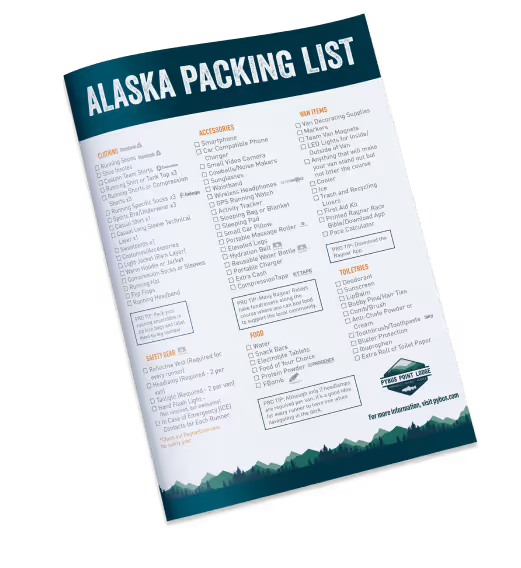
Download, share, or print out our PDF Packaging list to make sure you bring all the gear you need for your Alaska vacation!
DOWNLOAD NOWDiscover why waterfalls around Pybus Point Lodge are unforgettable, offering stunning views and unique adventures. Plan your trip today!
LEARN MOREDiscover why people like you can’t stop talking about Pybus Point Lodge. More than 30 years ago, the lodge opened as a simple fishing camp, drawing a devoted following in spite of basic accommodations. With new owners and experienced guides and crew, our corner of Alaska has become an unbeatable fishing and eco-tourism resort.


Enjoy unlimited access to our fleet of motorized skiff boats. We’re just minutes away from beautiful freshwater stream fishing, and some of our guests’ biggest halibut catches have been reeled in on a skiff.


Three new 33’ walk-around boats make their debut for our 2019 season. Featured in the Seattle Boat Show and designed stem to stern specifically for ocean conditions in Alaska's Inside Passage, we couldn’t ask for better boats.


Guests love our build-your-own lunches, featuring fresh ingredients and thin-sliced meat we smoke right outside. Meals at the lodge are always made to order – no buffets or cafeteria-style meals at Pybus Point Lodge! Our chef has created menu options that are beautiful and delicious without feeling pretentious or unfamiliar.


If you’re going to come all the way to Alaska, you may as well fish with an experienced guide on hand to keep you on the fish and take care of all the little details. You can enjoy the scenery, your company, and the world-class fishing. You’ll get your guide’s attention as much as eight hours each day – already included in the cost of your trip.


Upgrade your trip to see the Alaskan wilderness from the air. Our experienced pilot will land on a secluded lake and guide you to some of the best salmon and native trout fishing in the state.


While you go out and play, our talented staff will make sure your room stays tidy and clean! We receive even more compliments about our friendly staff than we do about Alaska's stunning beauty!


Pybus Point Lodge is located on the remote and secluded far south edge of Admiralty Island National Monument. Coverage is always tricky in deep valleys and remote natural areas. We found that AT&T has the most reliable cellular service at the lodge while T-mobile, Sprint, and Verizon can be picked up while out on the ocean. We do have a lodge phone you can use if necessary.
If you can't get a signal, we do provide free high-speed WIFI to the lodge and cabins. A popular option is to utilize your phones WIFI calling mode to communicate and take calls while at the cabin, although we prefer to unplug and enjoy all that the island has to offer.


The calm, cool waters of Alaska’s Inside Passage are the perfect habitat for humpback whales. Our guests tell us close encounters with these peaceful giants have changed the way they see the world – and we know just what they mean.


You’ll stay with us on Admiralty Island, called Xootsnoowú by native Tlingit people, which means “Fortress of the Bears.” There are more bears on our island than in all 49 other states combined – and more than 2.5x the number of people here!


A short ride in one of our skiffs will take you to the mouth of a river where, if your timing is right, you can watch salmon make their final run to spawn. When it isn’t overrun by bears dining on the feast, you can walk upstream just a few minutes to a beautiful waterfall in the thick forest.


From tiny phosphorescent algae lighting up our private docks to enormous humpback whales hunting in our deep, calm waters, you won’t find a more beautiful place to experience Alaska. Pybus Bay is a photographer’s paradise – bald eagles and brown bears, orca, otters and sea lions, and more. We can’t wait to help you experience Alaska.


A short ride in one of our skiffs will take you to the mouth of a river where, if your timing is right, you can watch salmon make their final run to spawn. When it isn’t overrun by bears dining on the feast, you can walk upstream just a few minutes to a beautiful waterfall in the thick forest.


Take quick detours or day-long excursions to explore some of our planet's most beautiful, remote waterfalls and glaciers.


Meet us in Juneau and let our experienced staff handle every detail of your all-inclusive Alaskan vacation, starting with a beautiful seaplane flight to our secluded lodge at Pybus Bay.