


The thing that separates these from most salmon cakes is that the fish gets chopped by hand instead of run through a food processor. It takes a few more minutes and it is worth it. You end up with real pieces of salmon you can see and taste, not a paste.
The salsa leans the whole plate toward Southeast Asia. Mango, lime, ginger and jalapeño against a rich fried cake, with soy and a little red wine vinegar underneath. Make it while the cakes rest and it has time to come together.
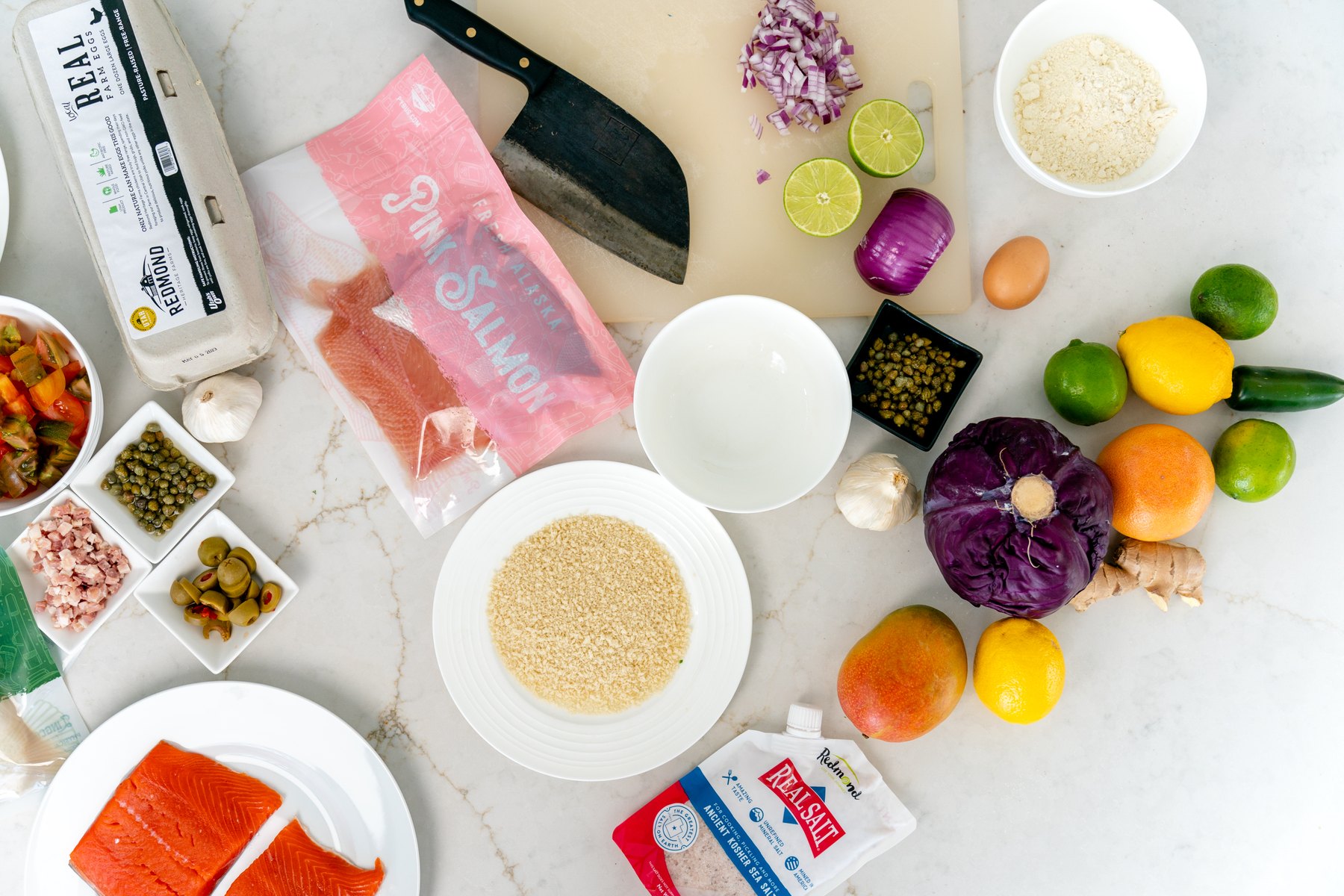
Lay the fillet skin side down and run a long knife between the flesh and the skin, keeping the blade angled down and pulling the skin taut with your other hand. Take off any grey line along the belly while you are there. It is edible but it is strong, and it muddies everything else.
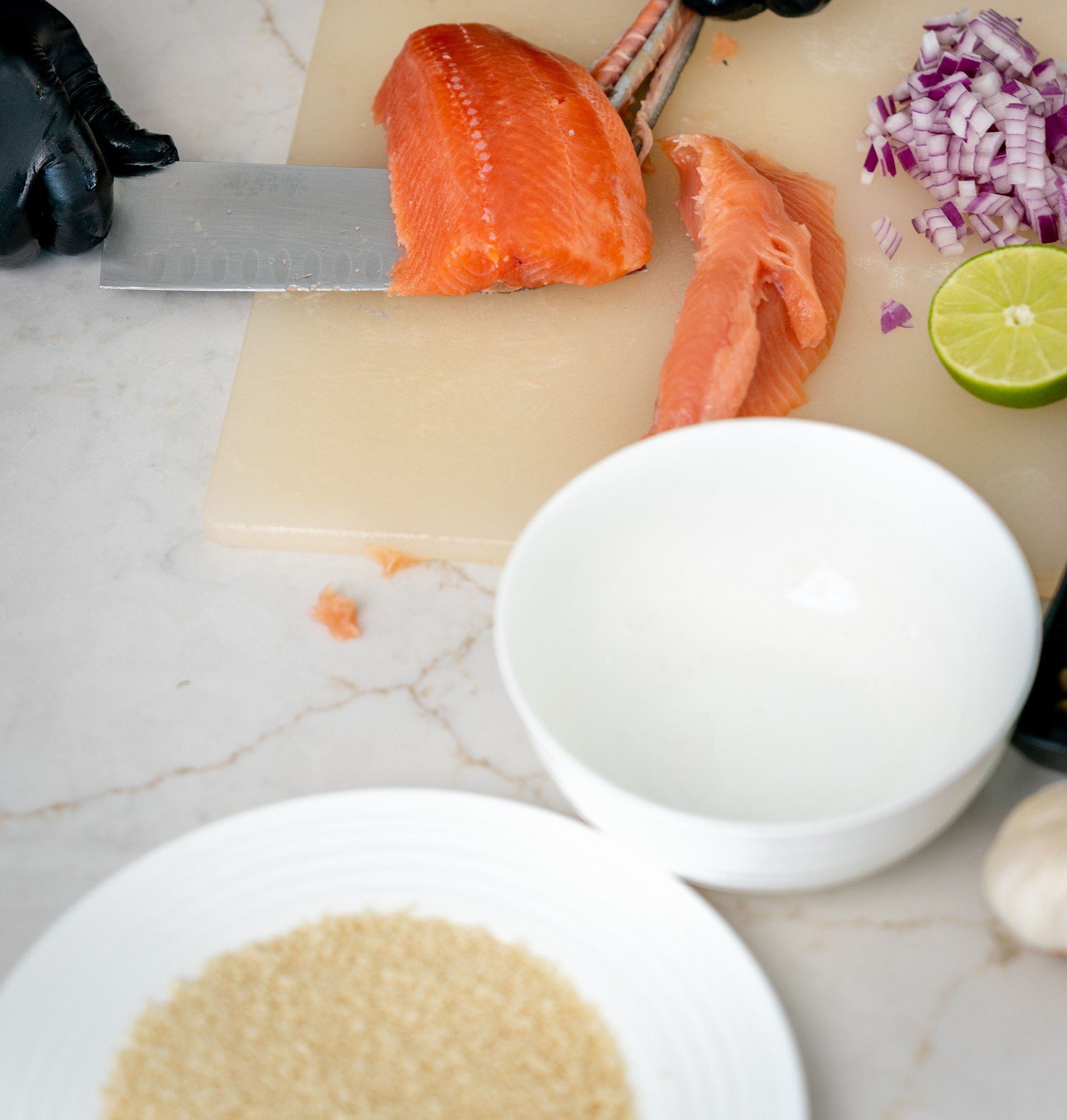
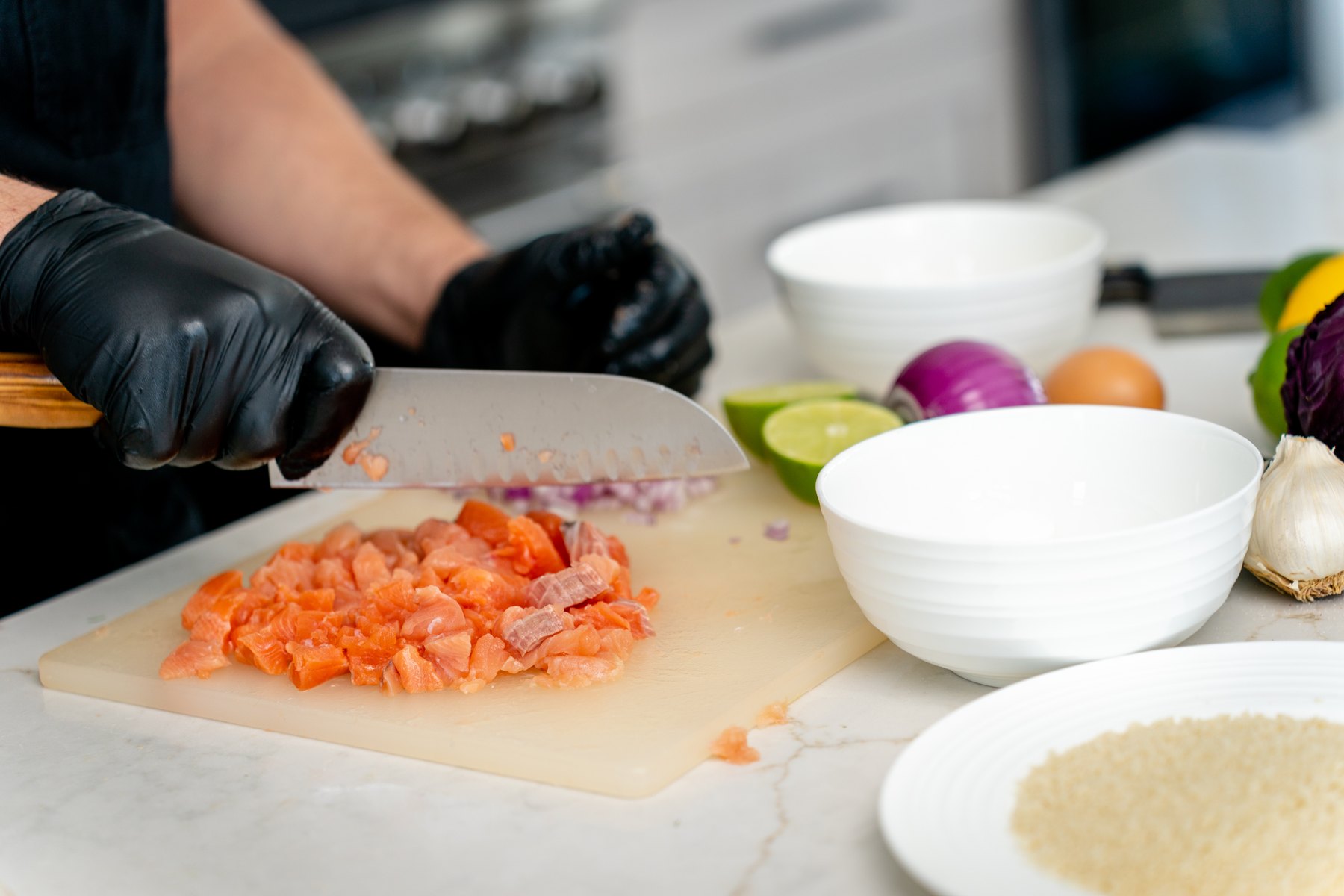
Cut the fillet into strips, then across into a rough dice, then keep working the pile with the knife until the pieces are about the size of a pea. Stop there. If you keep going it turns to paste and the cakes come out dense. You want to still see flecks of salmon in the finished cake.
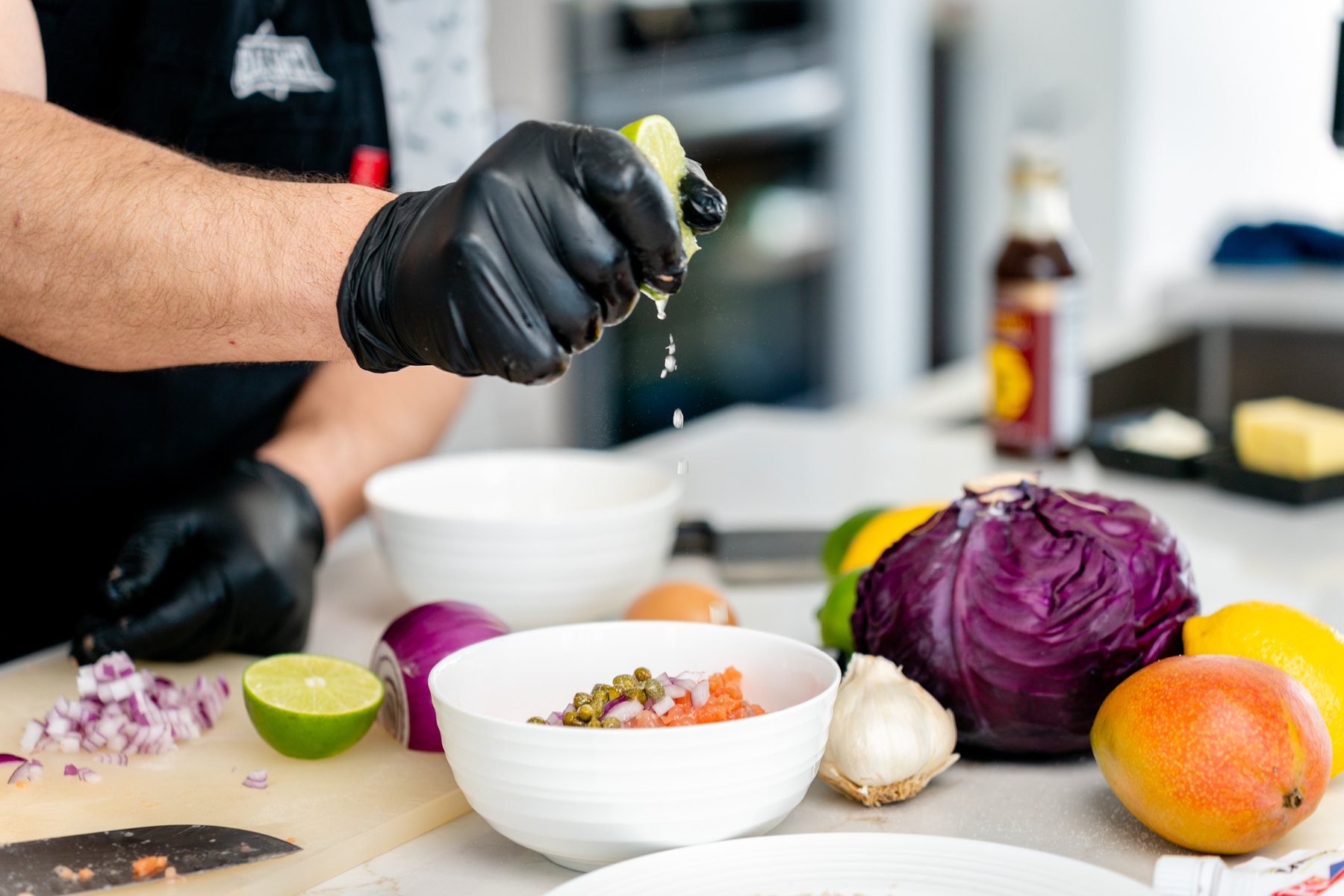
Move the salmon to a large bowl. Add the green onions, dill, capers, teriyaki, lemon juice and smoked paprika, then season with salt and pepper. Give it a taste before the egg goes in and adjust the salt now, because you will not want to taste it again once it is raw and bound.
Add the panko, the flour and the egg. The panko soaks up the moisture the salmon gives off, the flour tightens it, and the egg holds the whole thing together in the pan. Fold it with a spoon rather than beating it. Overworking the mix is the other way to end up with a dense cake.
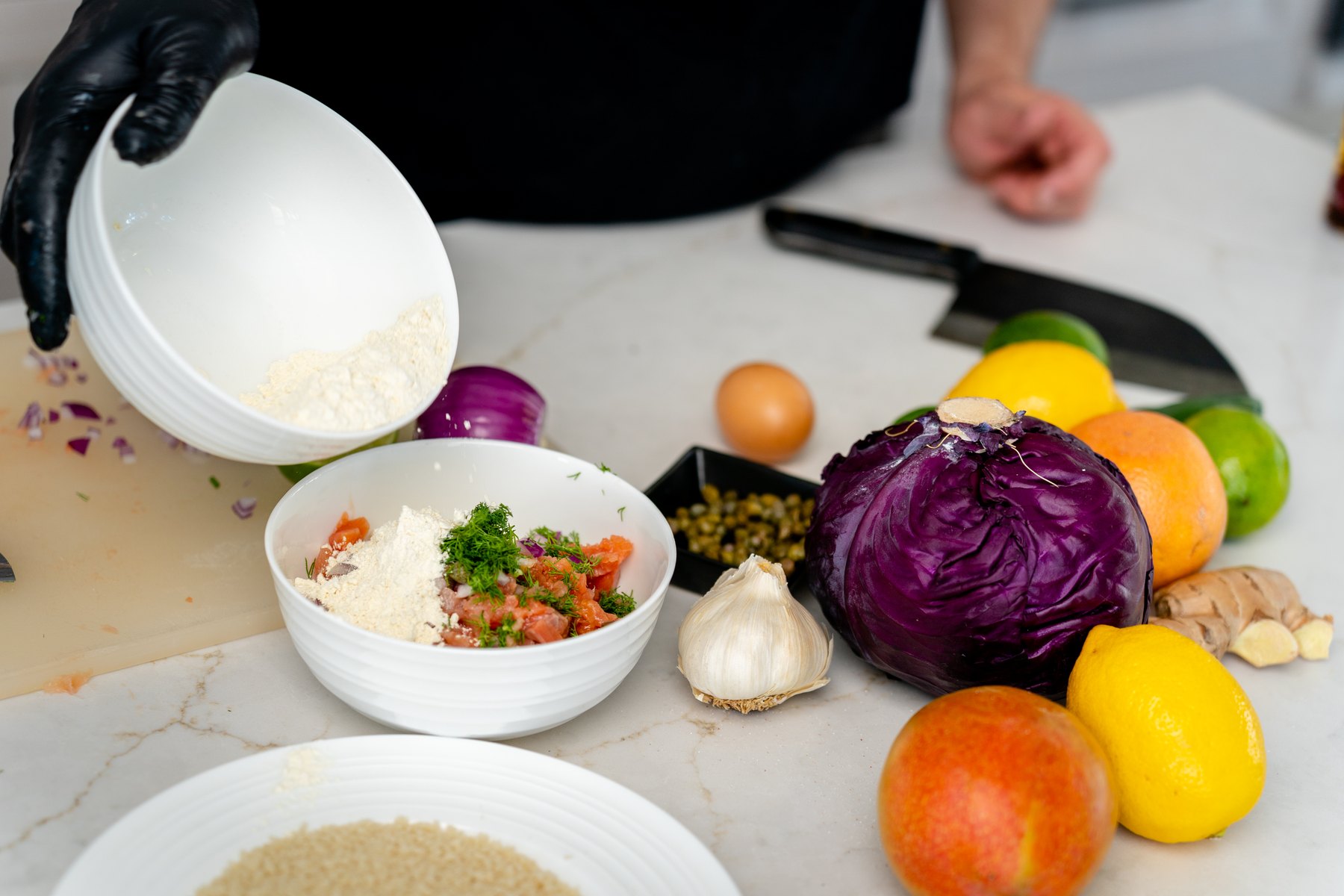
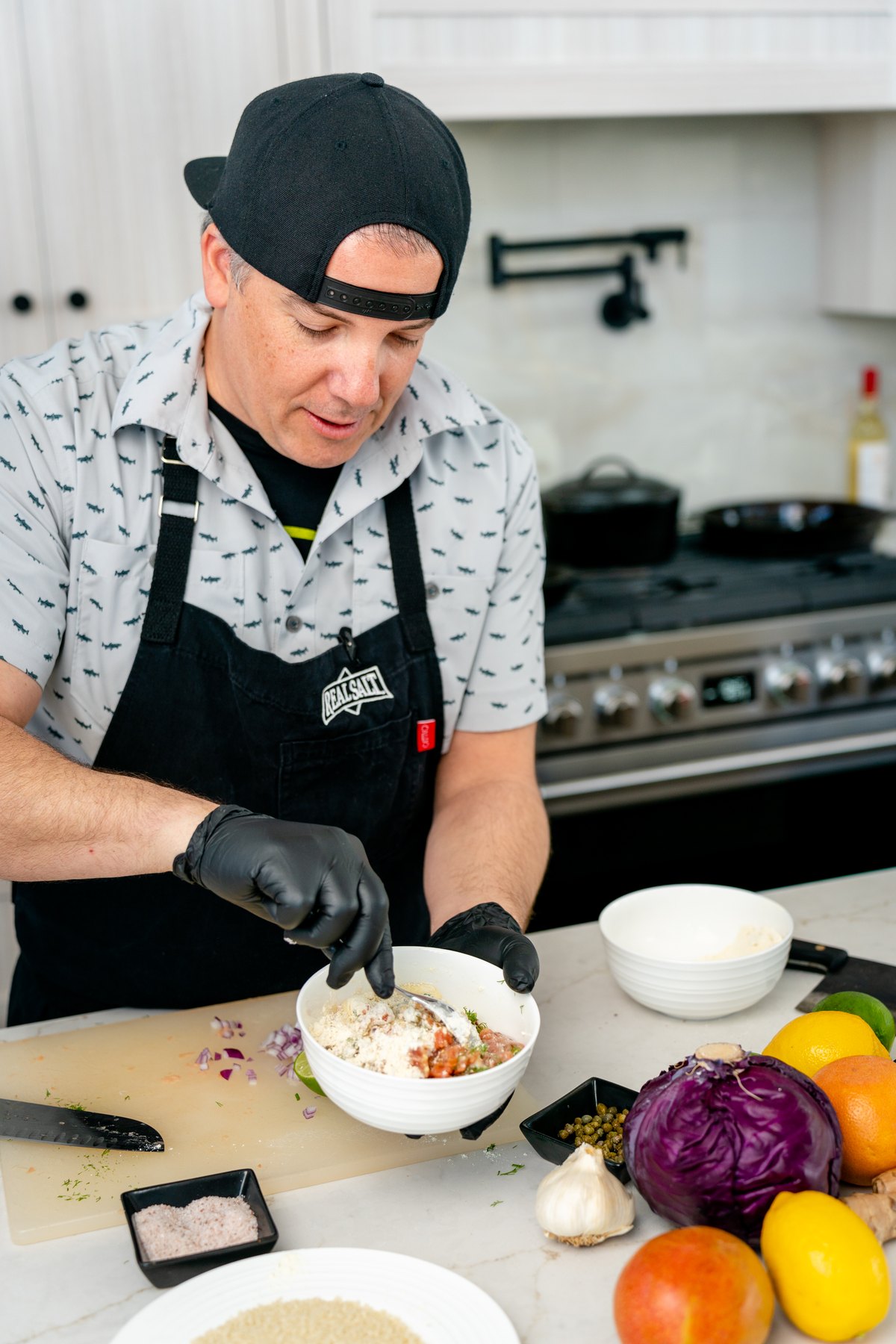
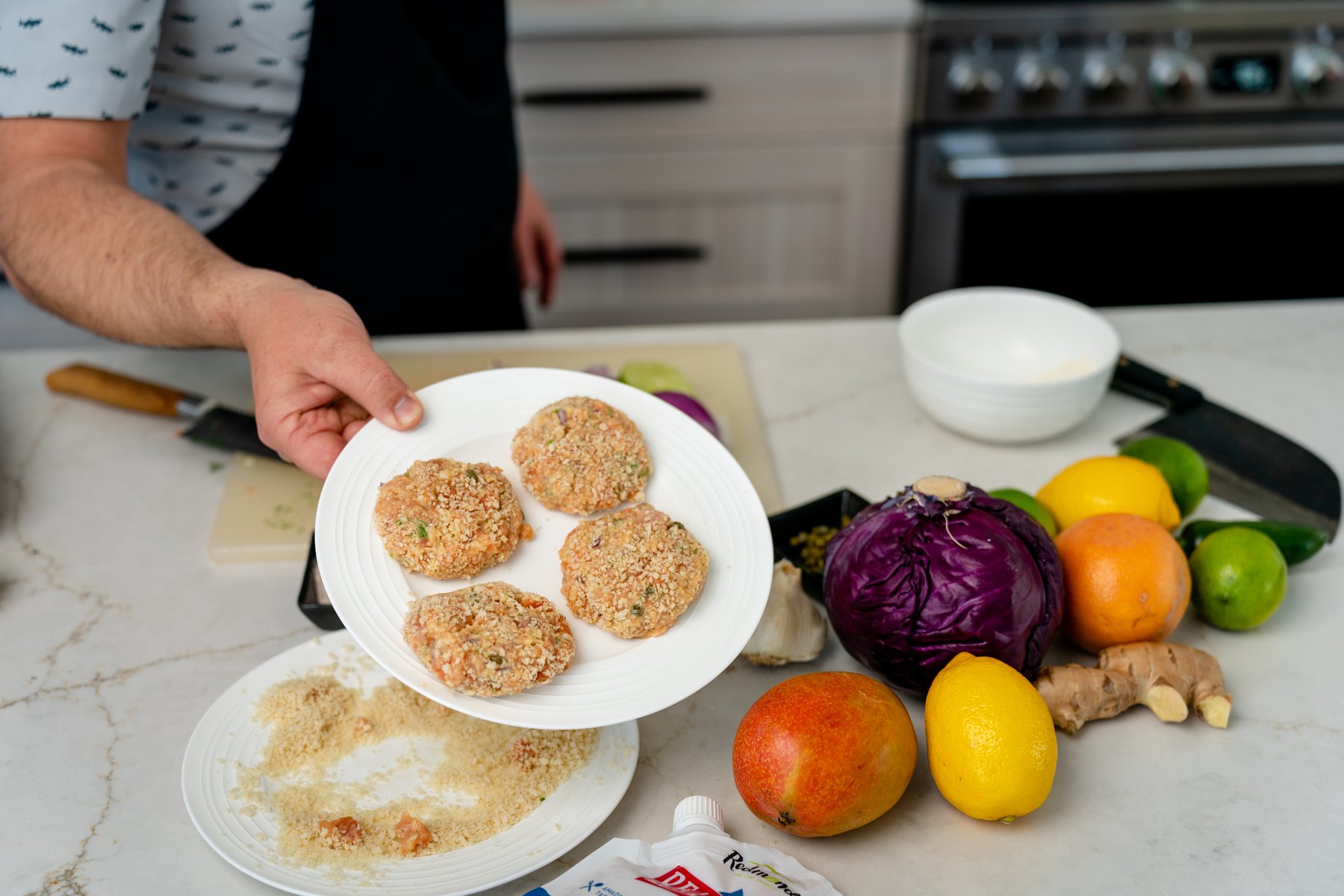
Shape the mixture into patties about 3 inches across and half an inch thick. Press each one into a plate of panko so both faces pick up a layer. That outside coating is what gives you the crust in the finished photo. Set them on a plate and let them sit a few minutes so they firm up before they hit the heat.
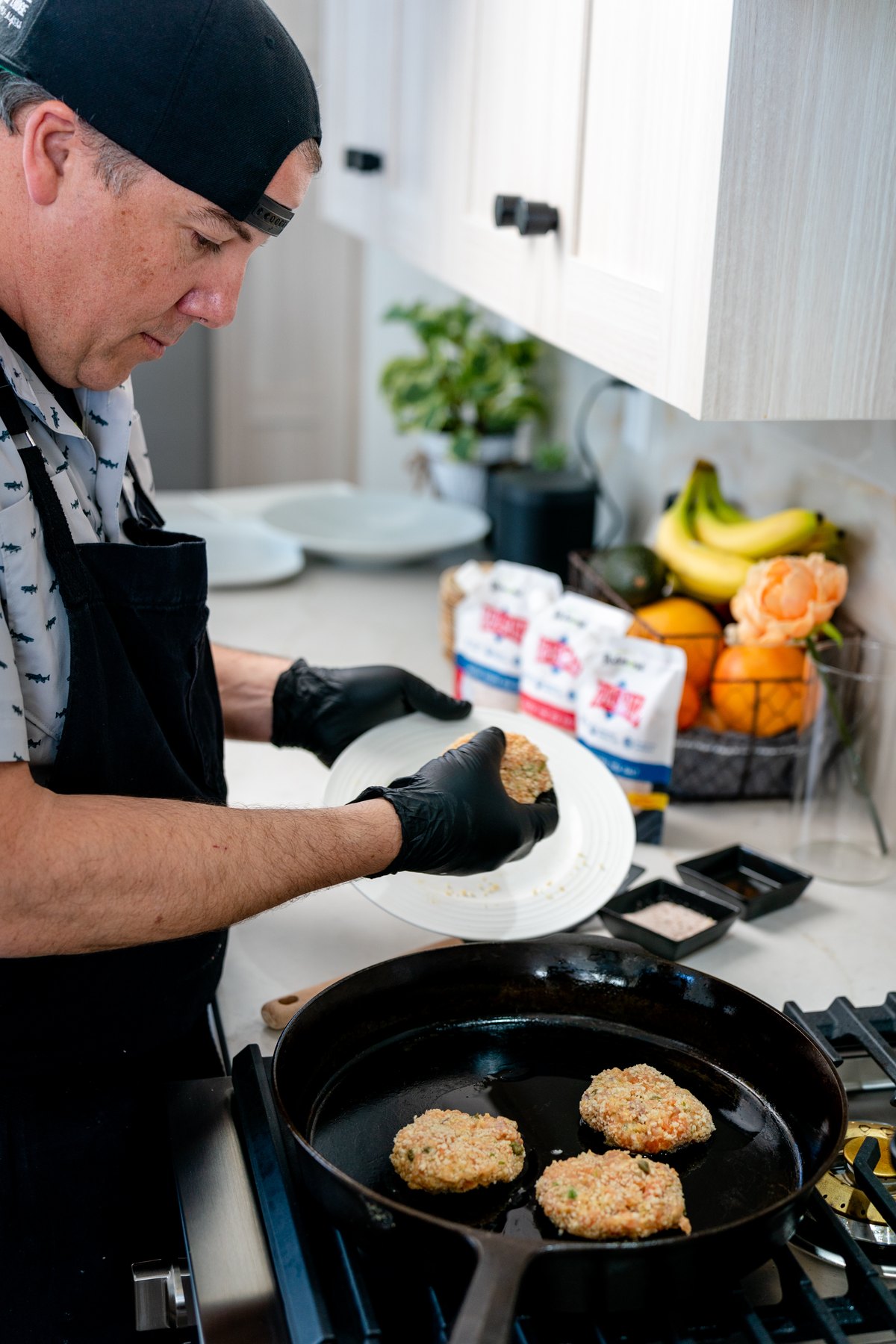
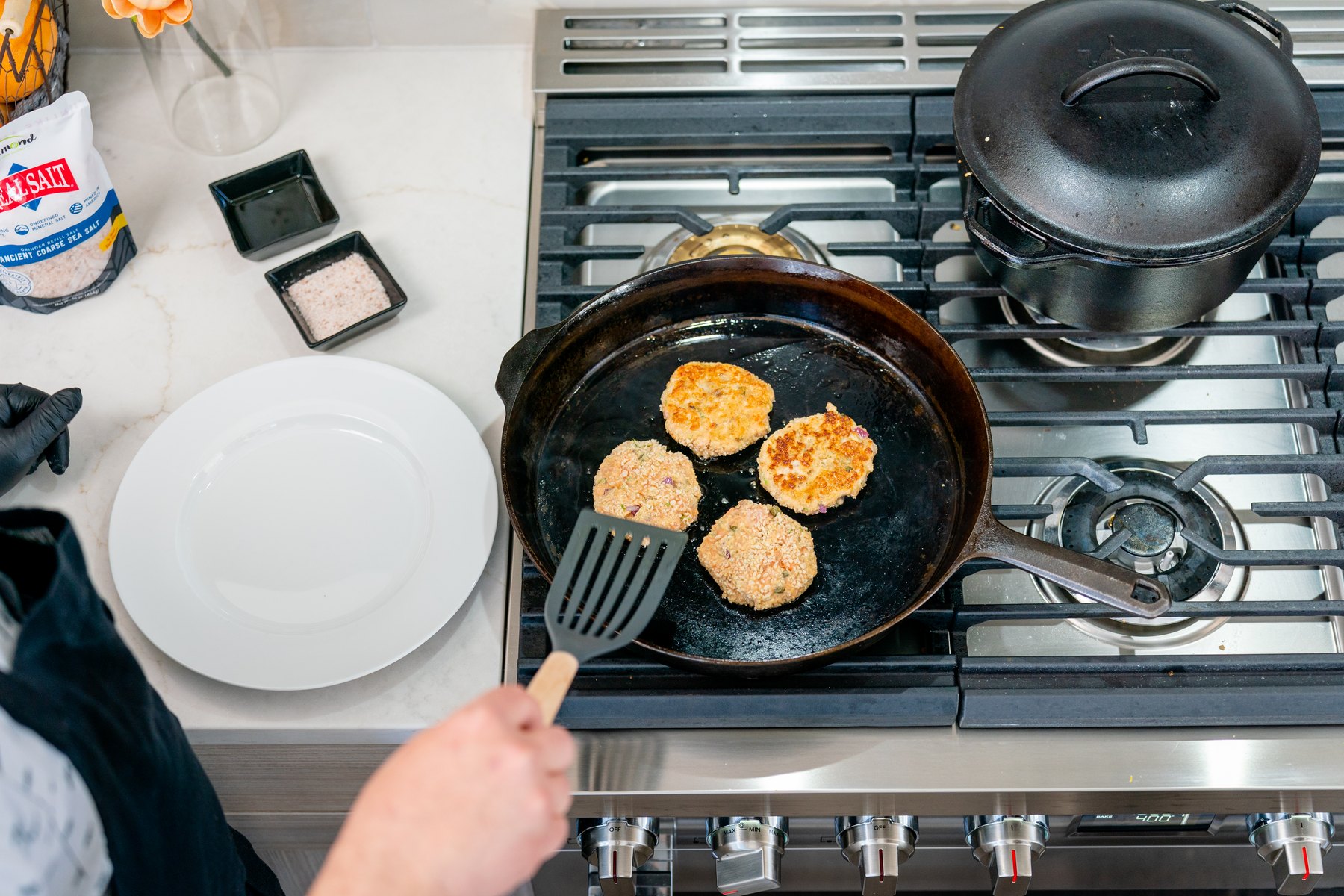
Heat the sesame oil in a heavy skillet over medium. Cast iron holds its temperature better than anything else here, which matters because cold cakes drop the heat the moment they land. Lay them in without crowding and leave them 3 to 4 minutes a side, turning once, until both faces are golden and the middle is just cooked. Sesame oil colors fast, so keep it at medium and do not walk away.
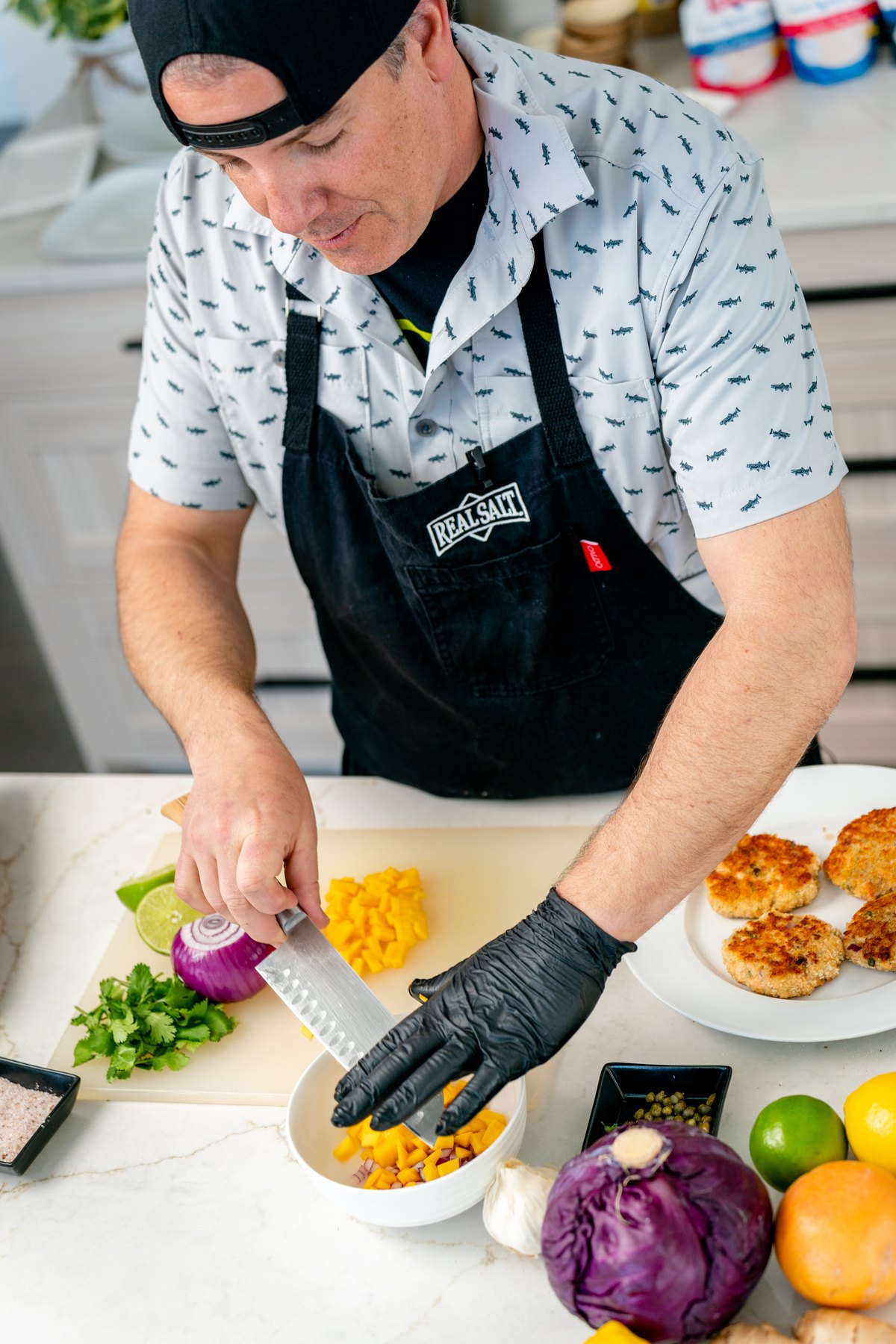
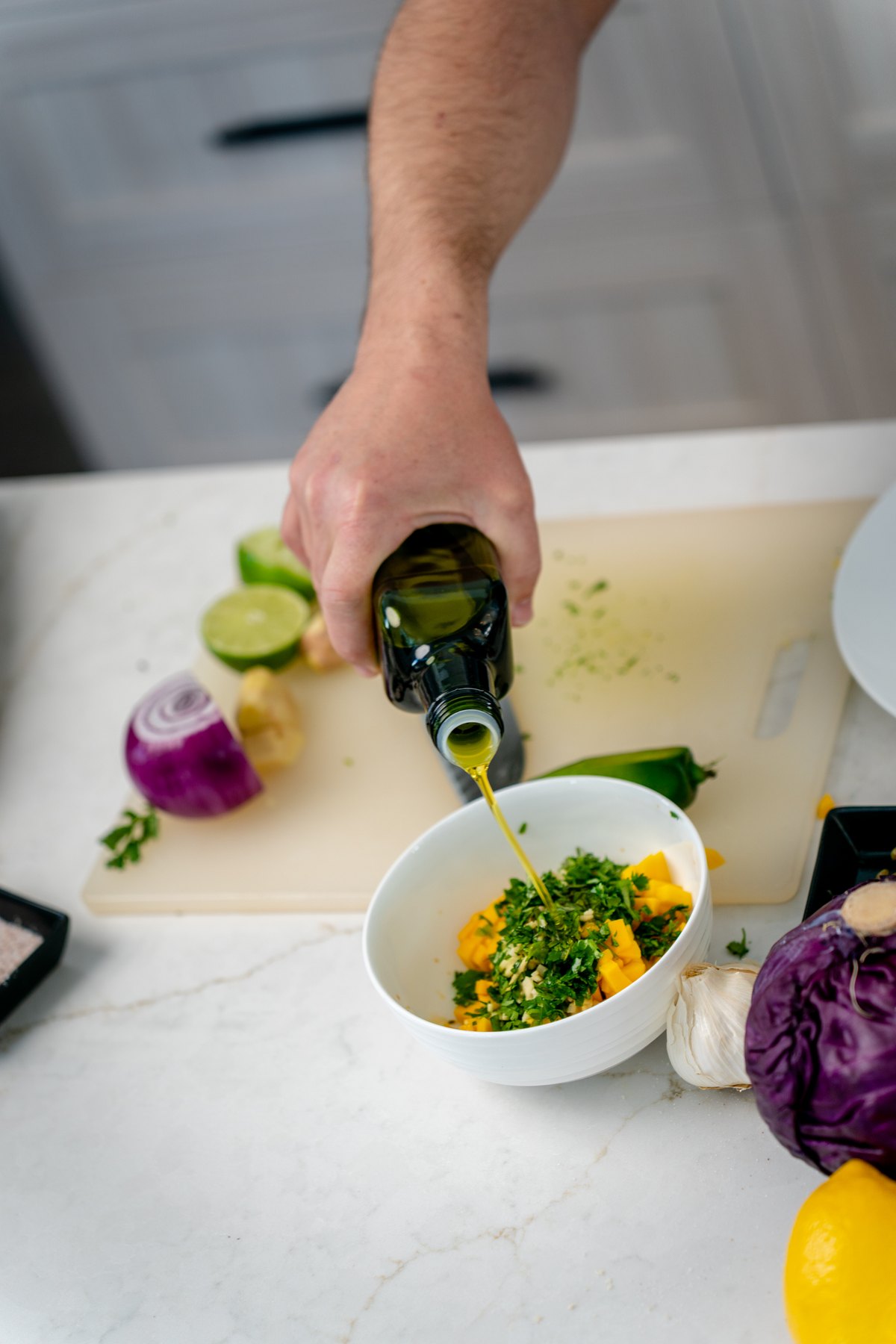
While the cakes rest, dice the mango small and even, about a quarter inch, and put it in a bowl with the red onion, jalapeño, ginger and cilantro. Add the soy sauce, olive oil, red wine vinegar and the lime juice, then salt to taste. Stir gently so the mango keeps its shape. You can make this ahead and keep it cold, and it is better after twenty minutes than it is straight away.
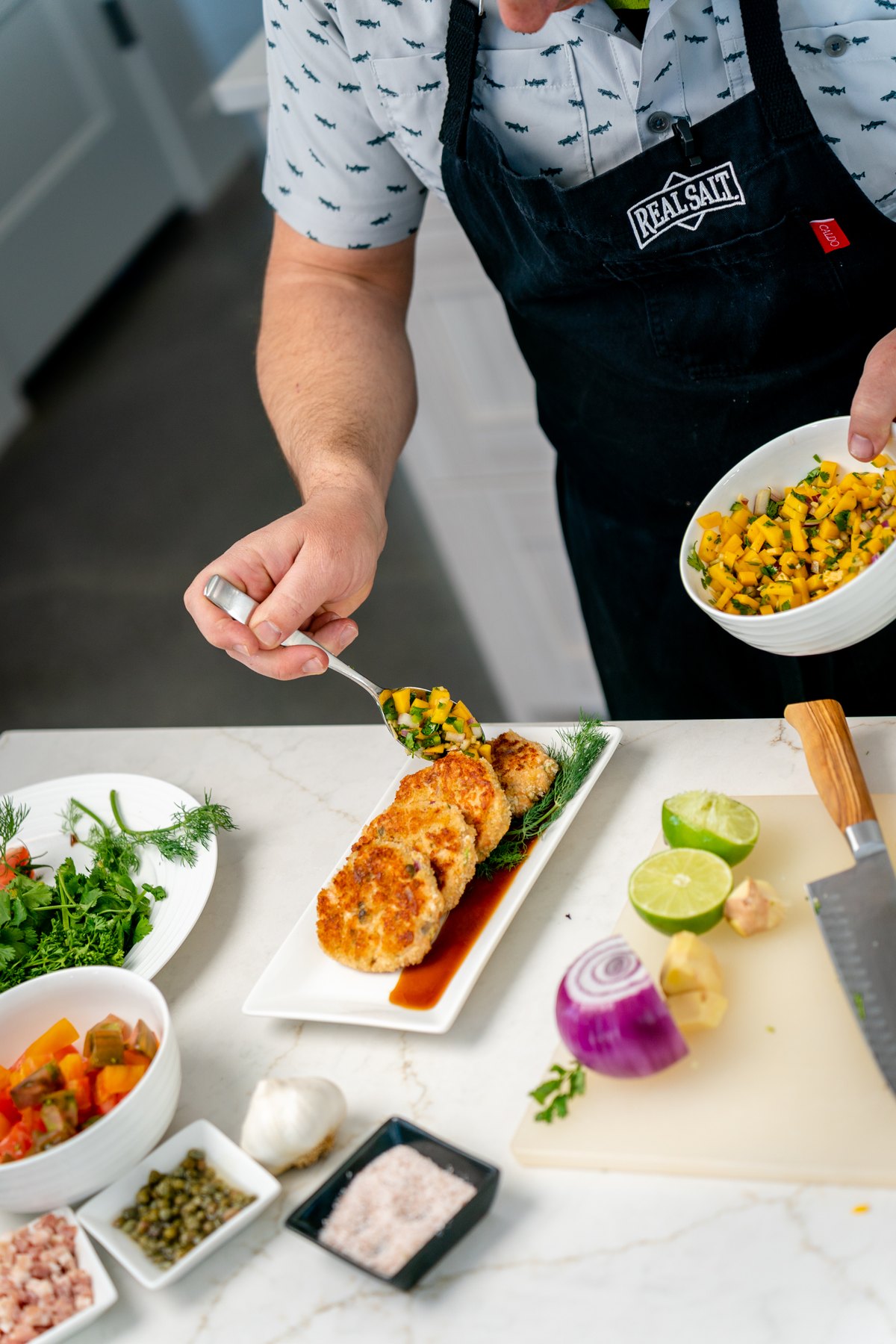
Lay the cakes out and spoon the salsa over the top, letting some of it fall onto the plate. Serve them warm rather than hot. A few minutes off the heat lets the middle settle, and the cold salsa against a warm cake is most of the point of the dish.
This is a good way to use the tail end of a fillet or the pieces left after portioning, since it all gets chopped anyway. The mix holds in the fridge for a day if you want to make it ahead, and the cakes reheat better in a dry pan than in a microwave. Any salmon works. Coho and sockeye both fry up well, and pink is the one we reach for when we have it.